Mauritian food tells the story of the island. Over centuries, people arrived from India, Africa, Madagascar, China and France, and each brought their own cooking. The result is a cuisine where a curry, a Creole tomato sauce and a plate of fried noodles can all appear at the same family lunch, and nobody finds that strange.
Here are the dishes worth looking for, and why the best way to understand them is to cook them.
Dholl puri
If Mauritius has a national street food, this is it. Two soft flatbreads are filled with a thin layer of ground yellow split peas, then wrapped around a spoonful of bean curry, rougaille and chutney. They are cheap, filling and best eaten warm from a stall, usually in pairs.
Rougaille
A Creole sauce of tomatoes, onion, garlic, thyme and chilli, simmered until rich. It is served with fish, sausages, salted fish or vegetables, and every household has its own version. Ask three Mauritians for the right way to make it and you will get three answers.
Gateaux piments
Small, crunchy fritters made from split peas, chilli and herbs. Despite the name (“chilli cakes”), most are only gently spicy. They are a classic snack with a cup of tea or tucked into a fresh baguette.
Mine frite and the Chinese-Mauritian table
Fried noodles with vegetables, egg and soy, often with chicken or seafood. Mine frite, along with dumplings and “boulettes” in broth, shows how deeply Chinese-Mauritian cooking is woven into everyday food.
Something to drink: alouda
On a hot day, look for alouda: a sweet, cold milk drink with basil seeds and jelly. Think of it as Mauritius in a glass, part dessert and part refreshment.
The secret is in the stone
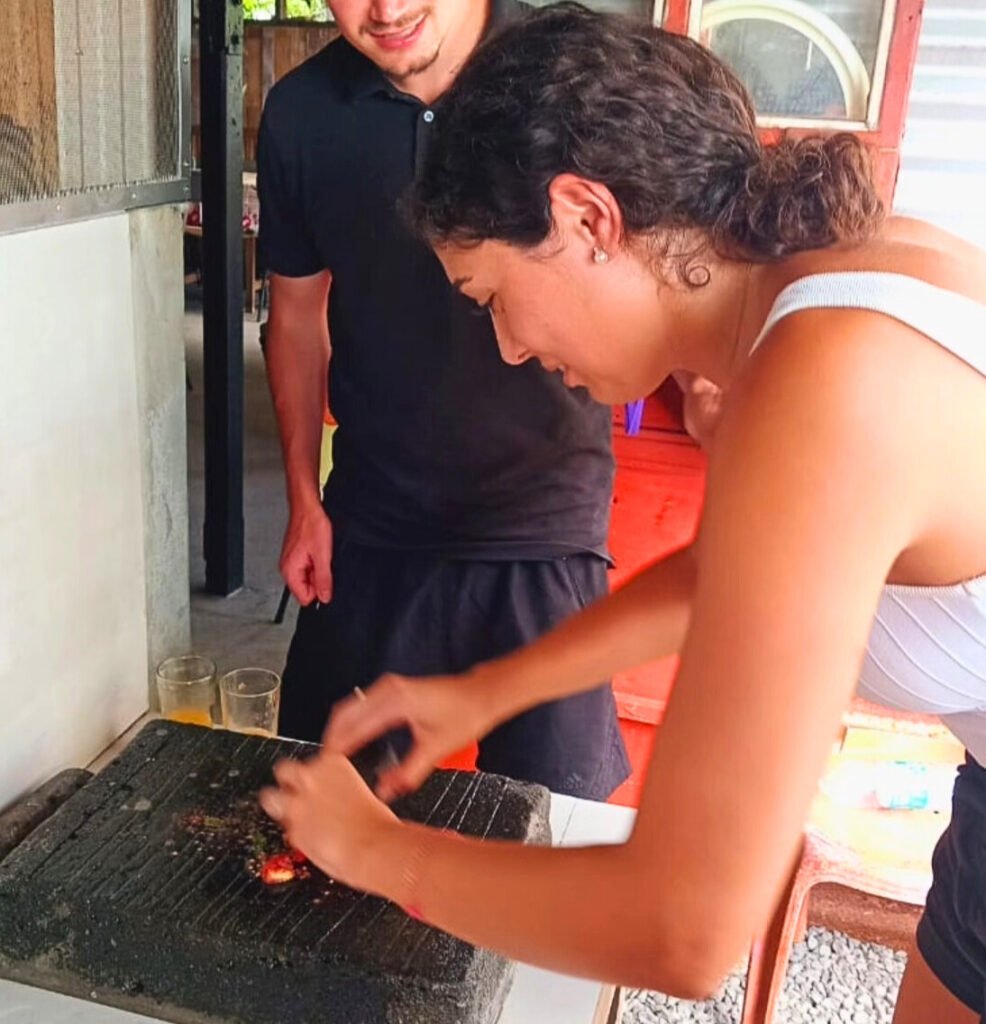
Many Mauritian kitchens still keep a roche cari: a heavy flat stone with a stone roller, used to grind chillies, garlic, ginger, herbs and tomatoes into chutneys and curry pastes. Grinding by hand crushes rather than chops, which releases more aroma than a blender. Once you have tasted a chutney made this way, it is hard to go back.
Learn it at a family table
Our Mauritian Cooking Class takes place in a family home, not a hotel kitchen. You will grind fresh chutneys on the roche cari, learn to fold samosas the traditional way, cook together and then share the meal around one table. It is private to your group, family-friendly and takes about three hours, starting at 10 am.
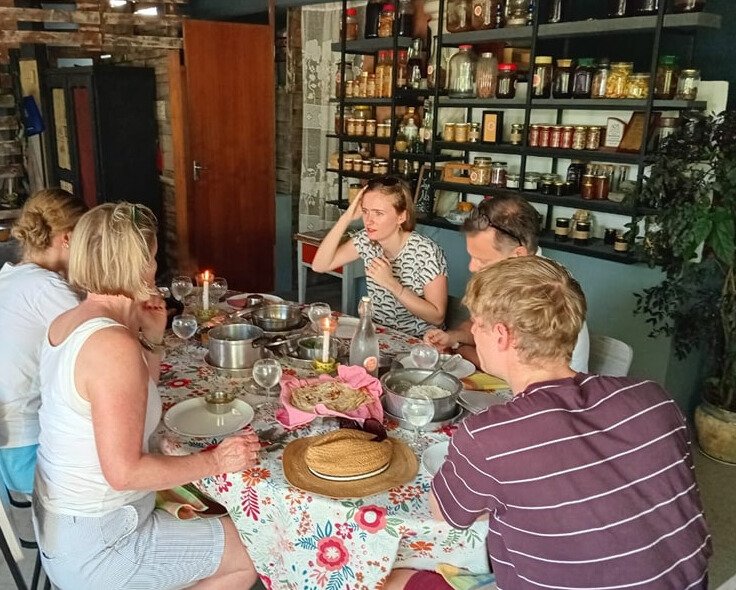
You will leave with recipes, a full stomach and a much better idea of what to order at the next market stall.