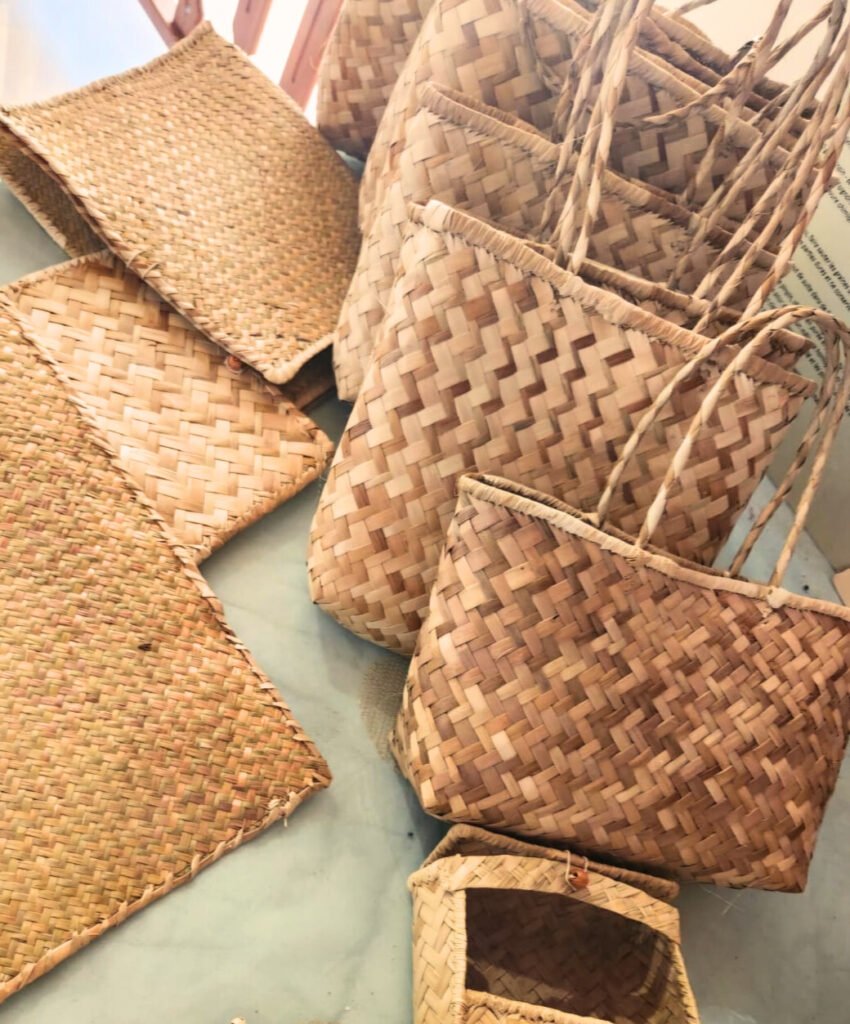
Walk through any Mauritian market and you will see them: sturdy woven bags, sun hats and mats in warm shades of straw. Most are made from vacoa, the long leaves of the Pandanus utilis tree. For generations the craft was simply part of everyday life on the island. Today it is one of the most direct ways to touch Mauritian heritage with your own hands.
What is vacoa?
Vacoa, sometimes called screw pine, is easy to spot. Its leaves spiral around the trunk in tight corkscrews, and older trees stand on stilt-like roots that reach down into the soil. The leaves are long, tough and edged with small spines, which is exactly what makes them good weaving material once they have been prepared.
Islanders once used vacoa for almost everything: roofing, storage baskets, sleeping mats and the classic market bag known in Kreol as a tente. Plastic has replaced much of that, but the skill has been kept alive by artisans who still work the leaves the old way.
From leaf to material
Weaving is the last step, not the first. The leaves are cut, the spiny edges and midrib are stripped away, and the strips are dried in the sun until they turn from green to pale gold. They are then softened and cut to an even width, because the width of the strip decides how fine the finished piece will be. Narrow strips make a delicate weave for hats; wider ones make a strong basket.
It is slow, careful work, and that is part of the appeal. Once your hands find the rhythm of over-and-under, the process becomes calm and almost meditative.
Why it is worth learning
Buying a vacoa bag supports local makers. Making one yourself gives you something more: an understanding of the patience behind every piece you see in the markets, and a souvenir with a story you can tell. It is also a genuinely hands-on experience in a country where many visitors only see the beach.
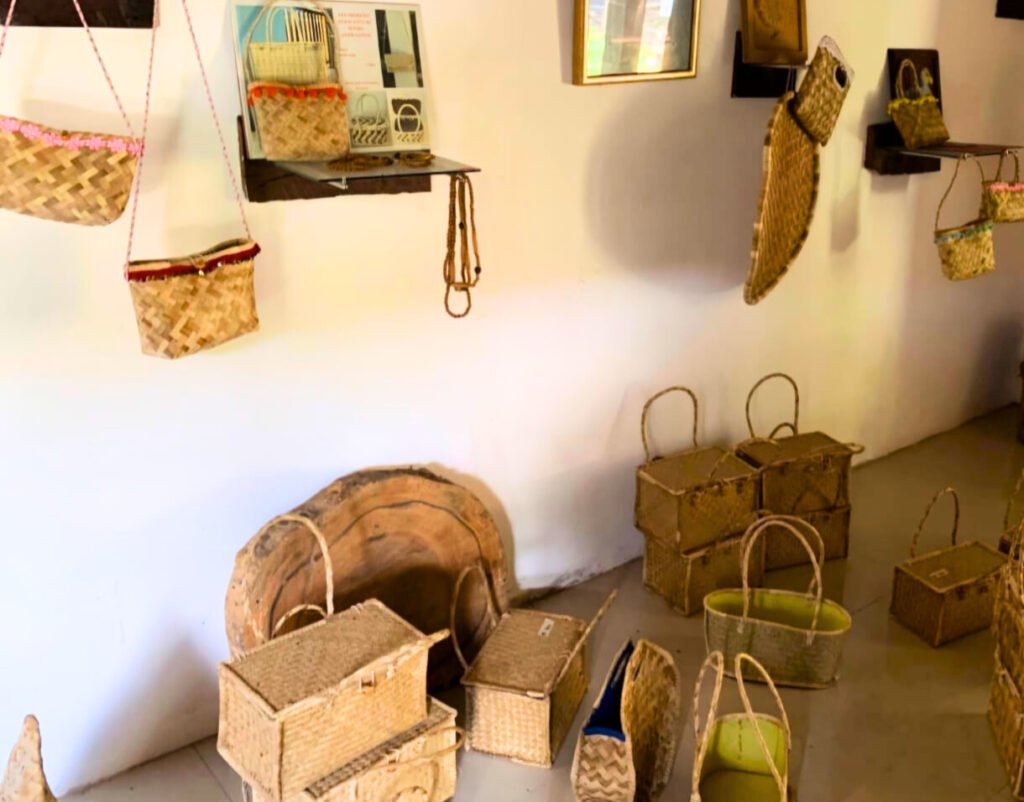
Try it yourself
In our Vacoa Weaving Workshop, a local artisan guides you through each stage, from the story of the plant to the finished object, and you leave with an item you made yourself. Sessions are private to your group, beginner-friendly and take about two hours, so they fit easily into a morning or an afternoon.
Bring curiosity and a little patience. The leaves will do the rest.